
Narcolepsy prevalence: How common is narcolepsy?
 Reviewed by
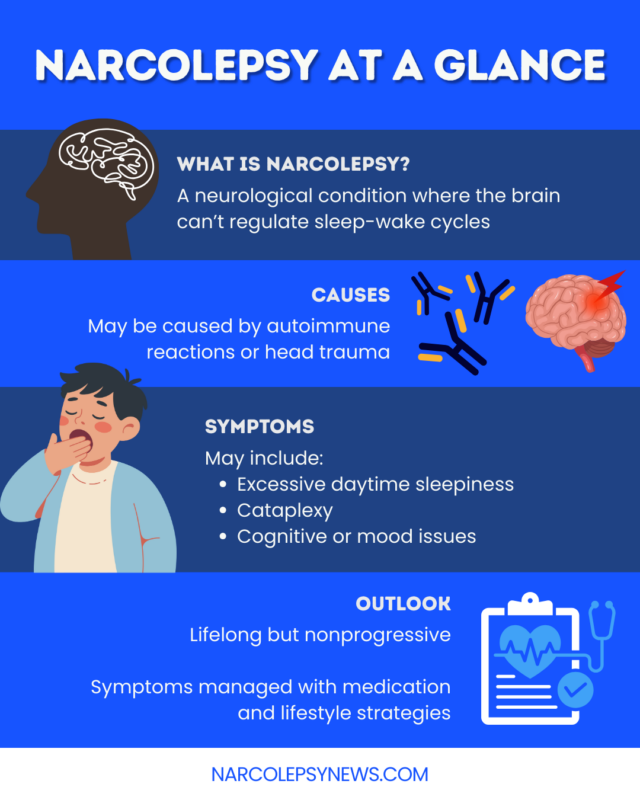
 Narcolepsy is a rare, lifelong neurological sleep disorder that affects how your brain regulates sleep and wakefulness. The primary symptom is excessive daytime sleepiness (EDS), but narcolepsy can also involve disrupted nighttime sleep. Similarly, features of rapid eye movement (REM) sleep can also start to intrude into waking.
If you have been diagnosed with narcolepsy, you may wonder how many other people live with the condition. Estimates of narcolepsy prevalence vary, partly because symptoms can be difficult to recognize and researchers use different methods to identify cases.
How common is narcolepsy?
How common is narcolepsy? There is no single answer to that question. In general, estimates suggest that narcolepsy affects fewer than 100 in every 100,000 people. However, narcolepsy statistics vary considerably among studies.
There have also been studies that suggest narcolepsy may be misdiagnosed and can take upwards of a decade to fully diagnose. This is especially prevalent in preteen and teen patients, where symptoms may mimic other diseases such as attention deficit/hyperactivity disorder (ADHD) or depression. Because of this, the true number of people affected by narcolepsy can be challenging to calculate. However, greater awareness, broader access to testing, and improved recordkeeping may lead to more diagnoses.
What is the difference between prevalence and incidence?
Researchers commonly use two measurements to describe how frequently a condition occurs:
- Prevalence: the total number of people who have a condition at a specific time or during a defined period
- Incidence: the number of new cases identified in a population during a defined period
Prevalence includes new and existing cases, while incidence includes only new cases. Because it can be difficult to determine exactly when narcolepsy began, some studies measure new diagnoses rather than the onset of symptoms.
Narcolepsy prevalence in the United States
A large U.S. study estimated that the overall prevalence of diagnosed narcolepsy was 53.6 per 100,000 people.
The researchers reported these results:
- narcolepsy type 1 affected 12.6 per 100,000 people
- narcolepsy type 2 affected 42.9 per 100,000 people
In that study, narcolepsy prevalence in the U.S. was higher among females than males. People with narcolepsy type 1 also were about four years younger, on average, than those with type 2.
These estimates were based on insurance claims and electronic medical records from an insured population. The results may not represent everyone in the U.S., including people who are uninsured or have not received a diagnosis.
Narcolepsy prevalence worldwide
It is difficult to determine exactly how many people have narcolepsy worldwide. A systematic review of 35 studies found that global narcolepsy incidence ranged from 0.06 to 6.56 new cases per 100,000 person-years. Estimates of narcolepsy prevalence worldwide ranged from 1.05 to 79.40 per 100,000 people.
The wide range may reflect differences in:
- diagnostic criteria
- access to sleep specialists and testing
- awareness among healthcare professionals
- study populations and age groups
- healthcare and recordkeeping systems
- methods used to identify cases
How prevalence varies by country and population
Narcolepsy prevalence by country varies widely. Studies have reported relatively high rates in some populations and much lower rates in others, but direct comparisons can be difficult because researchers may use different diagnostic criteria and study methods.
Genetic factors also may contribute to some differences, as there are certain ones that can increase the risk of narcolepsy. However, while this genetic finding can be seen in patients with narcolepsy, this can also be seen in people without it.
Studies examining differences by sex also have produced mixed results. Some U.S. studies have reported higher rates among females, while broader reviews have not found a consistent difference between males and females.
Type 1 vs. type 2 narcolepsy prevalence
Estimates of type 1 narcolepsy prevalence and type 2 narcolepsy prevalence vary according to the population and diagnostic method studied. Recent U.S. data suggest that diagnosed type 2 narcolepsy may be more common than type 1, but this pattern has not been consistent across all studies.
Narcolepsy type 1 is defined clinically by cataplexy, which is a sudden loss of muscle control. A specific neurotransmitter with two names for the same transmitter (orexin and hypocretin) is alsp much lower or absent. Narcolepsy type 2 does not involve cataplexy, and hypocretin levels are not known to be low.
Type 2 can be more slightly more difficult to distinguish from other causes of excessive sleepiness. As diagnostic criteria is constantly evolving, estimates of the relative prevalence of the two types also may change.
Narcolepsy in children and adolescents
A diagnosis of narcolepsy is rare among children and adolescents. Estimates of pediatric prevalence vary, with some sources reporting approximately 20 to 50 cases per 100,000 children worldwide.
Another U.S. study reported an incidence of 10 diagnosed cases per 100,000 children. This means researchers identified about 10 new diagnoses for every 100,000 children studied, not that 10 per 100,000 were living with the condition overall. Most diagnoses occurred during adolescence, and nearly 70% were classified as narcolepsy type 2.
However, caution needs to be taken with these numbers. As previously mentioned, narcolepsy may be underdiagnosed since symptoms in children can look very different from those in adults. In children, sleepiness may appear as irritability, hyperactivity, difficulty concentrating, or changes in school performance. It can take several years for a proper diagnosis after the onset of symptoms.
How underdiagnosis affects narcolepsy statistics
Narcolepsy underdiagnosis may prevent current statistics from reflecting the full number of people living with the condition. Factors that can contribute to delayed or missed diagnoses include:
- nonspecific or less-recognized symptoms
- symptoms that resemble other conditions
- limited awareness of narcolepsy
- difficulty accessing sleep specialists
- limited access to overnight and daytime sleep testing
- changes in diagnostic criteria
As awareness and diagnostic methods improve, prevalence estimates may increase. However, more research is needed to determine how many people are living with narcolepsy without a diagnosis.
Narcolepsy News is strictly a news and information website about the disease. It does not provide medical advice, diagnosis, or treatment. This content is not intended to be a substitute for professional medical advice, diagnosis, or treatment. Always seek the advice of your physician or other qualified health provider with any questions you may have regarding a medical condition. Never disregard professional medical advice or delay in seeking it because of something you have read on this website.