
Narcolepsy symptoms
 Fact-checked by
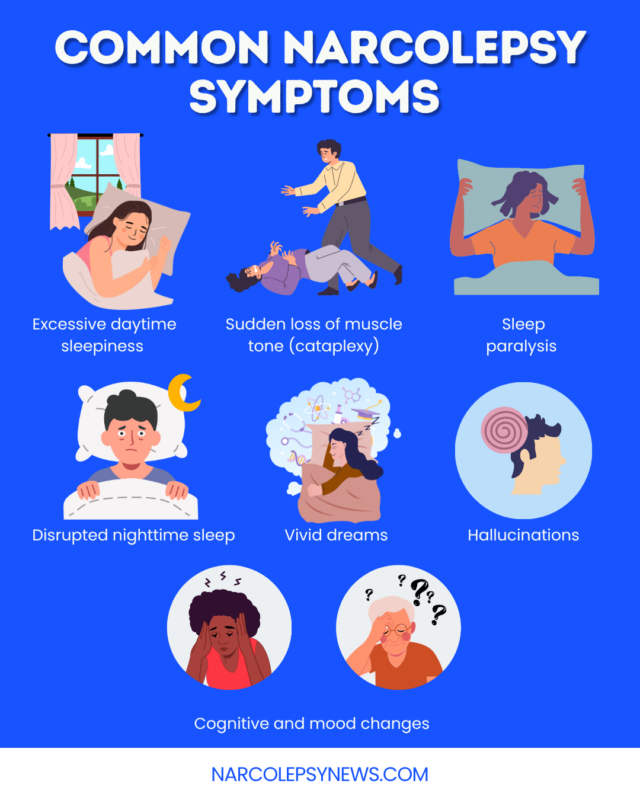
 The most common narcolepsy symptoms are related to dysregulated sleep, and include daytime sleepiness, sudden sleep attacks, and temporary loss of muscle tone. These problems can make it harder to think clearly and have a negative effect on mood.
Narcolepsy is a rare sleep disorder in which the body can’t properly regulate sleep-wake cycles. In healthy sleep, an individual repeatedly cycles through four sleep phases, ending in rapid eye movement (REM), a period of high brain activity and vivid dreaming.
When people with narcolepsy fall asleep, they often fall directly into REM sleep, and the body has trouble distinguishing between REM and wakefulness. These REM-related abnormalities explain most of the symptoms of narcolepsy.
Excessive daytime sleepiness
The hallmark symptom of narcolepsy is excessive daytime sleepiness (EDS), which is experienced by all people with the disorder and is necessary for a narcolepsy diagnosis.
EDS is characterized by an irresistible feeling of sleepiness during the day. While everyone feels sleepy sometimes, people with narcolepsy are sleepy throughout the day, every day, regardless of how much sleep they get at night.
In more moderate cases, this might mean people feel like closing their eyes when they become inactive. In severe cases, people may fall asleep uncontrollably wherever they are — even during daily activities like talking or eating — which is known as a sleep attack.
These attacks may last a few seconds (called microsleeps) to several minutes. Without proper narcolepsy treatment, sleep attacks can make daily activities like driving unsafe.
Other common symptoms
Besides EDS, people with narcolepsy experience a range of other sleep-related symptoms:
- Cataplexy: This is a sudden, brief loss of muscle tone without loss of consciousness. Cataplexy symptoms are often triggered by strong emotions and can range in severity from jaw sagging or head nodding to a full body collapse.
- Sleep paralysis: This is a temporary inability to move or speak during sleep-wake transitions, including when falling asleep or just waking up. It can last for a few seconds to minutes.
- Disrupted nighttime sleep: At night, people with narcolepsy may fall directly into REM sleep, but these periods throughout the night may be shorter or more fragmented than normal. This can cause people to wake up frequently, feel restless at night, or wake up feeling unrefreshed.
- Abnormal dreaming: People with narcolepsy may dream more vividly or report bizarre dreams and nightmares.
- Hallucinations: Vivid and sometimes bizarre hallucinations may occur when falling asleep (hypnagogic hallucinations) or waking up (hypnopompic hallucinations), which may affect sight, hearing, or touch. Such hallucinations often occur with sleep paralysis and may be perceived as frightening.
In REM sleep, the muscles are relaxed and temporarily paralyzed to prevent people from acting out their dreams, which are most vivid during this time. Cataplexy, sleep paralysis, and hallucinations are all thought to occur because the brain is not properly regulating the transition between wakefulness and REM sleep.
People with narcolepsy may also experience REM sleep behavior disorder, in which individuals act out their dreams because muscle movements are not suppressed like they should be.
As a consequence of excessive daytime sleeping and other sleep disruptions, people with narcolepsy also commonly experience:
- cognitive issues, such as brain fog, difficulty concentrating, and memory lapses
- mood changes, including irritability, low motivation, and depression
In general, the core narcolepsy symptoms in adults are similar to those in children, however, they can present differently. Early signs of narcolepsy in children could include behavioral problems like hyperactivity or irritability.
Children with narcolepsy also commonly experience rapid weight gain around the time sleepiness starts and may experience early onset of puberty.
Narcolepsy symptoms by type
There are two main types of narcolepsy — type 1 and type 2 — as well as a rare form known as secondary narcolepsy. These disease types differ in the underlying causes of narcolepsy and in the specific disease features.
- Type 1 narcolepsy: This type is characterized by a substantial loss of hypocretin (orexin), a brain signaling molecule that’s important for regulating sleep-wake cycles. Symptoms are generally more severe and include cataplexy.
- Type 2 narcolepsy: This type is characterized by normal hypocretin levels and mild narcolepsy symptoms. Narcolepsy type 2 symptoms don’t usually include cataplexy.
- Secondary narcolepsy: This type occurs as a direct result of a head trauma or other brain injury. Hypocretin levels may be affected, and cataplexy may or may not occur. People with secondary narcolepsy may also sleep for long periods and have other neurological symptoms related to the brain injury, such as memory issues or vision loss. EDS is often severe.
The difference between sleepiness and fatigue
In everyday life, many people use the terms sleepiness and fatigue interchangeably, but these are distinct concepts with different implications in narcolepsy.
- Sleepiness is an urge to fall asleep and struggle to stay awake. This is what leads to EDS and sleep attacks. A brief nap may provide temporary relief.
- Fatigue is a deep mental or physical lack of energy, or exhaustion. It makes a person feel drained, unmotivated, lethargic, or irritable, but not necessarily like they need to fall asleep. It often persists even after sleeping.
People with narcolepsy experience sleepiness and fatigue, and both can make it much harder to go about daily life. However, it’s important to know the difference, because sleepiness is the hallmark of narcolepsy that leads to a diagnosis.
Narcolepsy News is strictly a news and information website about the disease. It does not provide medical advice, diagnosis, or treatment. This content is not intended to be a substitute for professional medical advice, diagnosis, or treatment. Always seek the advice of your physician or other qualified health provider with any questions you may have regarding a medical condition. Never disregard professional medical advice or delay in seeking it because of something you have read on this website.