Excessive daytime sleepiness in narcolepsy
 Fact-checked by
 Excessive daytime sleepiness (EDS) — an overwhelming and irresistible urge to sleep at any time of day — is the hallmark symptom of the rare sleep disorder narcolepsy.
In narcolepsy, the brain signaling pathways that regulate sleep-wake cycles aren’t working properly, and the boundary between being asleep and awake becomes blurred. Certain aspects of sleep intrude into waking hours to drive core narcolepsy symptoms.
Excessive sleepiness in narcolepsy can substantially interfere with a person’s daily life, causing people to fall asleep when they shouldn’t and to have trouble focusing or regulating their mood. While treatment is unlikely to eliminate EDS, medications and lifestyle adjustments allow many people to lead relatively normal lives.
Causes
The hypothalamus is the brain region largely responsible for regulating sleep. Nerve cells in this area produce a signaling chemical called hypocretin (orexin), which is critical for stabilizing sleep-wake cycles.
In type 1 narcolepsy, the most common form of the disease, most hypocretin-producing nerve cells are lost, which is believed to be because of an autoimmune reaction against them. This hypocretin deficiency means the brain can’t stay in a stable “awake mode,” causing sudden urges to sleep at any time of day.
The exact cause of EDS in type 2 narcolepsy is not as well-established, because hypocretin levels are typically normal. It’s possible that hypocretin-producing nerve cells are still damaged, but to a lesser degree.
There are also other possible narcolepsy causes. In a rare form of the disease called secondary narcolepsy, EDS happens because of direct damage to the hypothalamus.
Signs and symptoms
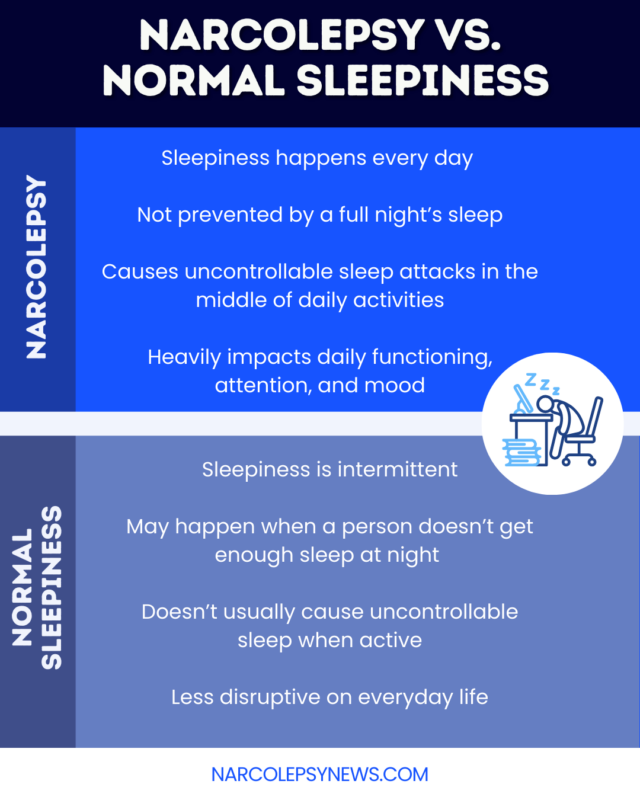
EDS is characterized by an overwhelming and irresistible need to sleep at any time of day. In narcolepsy, this happens every day, regardless of how much sleep a person gets at night. Signs of EDS may include:
- frequent sleepiness, regardless of how long or how well a person slept
- sudden sleep attacks, where an urgent feeling of sleepiness causes a person to fall asleep even during daily activities like eating, talking, or driving
- difficulty staying focused, paying attention, or remembering things
- feeling irritable or anxious
EDS can vary in severity. Some people might feel like nodding off only when they sit down or are inactive, while others may feel urges to sleep no matter what they’re doing.
Sleep attacks can look different from person to person. Some people have “microsleeps,” or very brief bursts of sleep that last only a few seconds. Others might continue performing routine activities automatically, such as writing notes in class or pouring a glass of water, without conscious memory of doing so. In other cases, daytime sleep attacks can last several minutes, during which a person is not moving or continuing activities.
Narcolepsy-related daytime sleepiness is often temporarily eased by short naps, but the sleepiness usually returns shortly afterward.
Diagnosis
Because EDS is the hallmark of narcolepsy, identifying it is a key step in reaching a narcolepsy diagnosis. Tests for EDS need to confirm that sleepiness is persistent and excessive, and not due to disrupted sleep at night (sleep fragmentation) or another medical condition.
Diagnosing EDS usually involves:
- a symptom review and clinical evaluation: Doctors will administer a sleep questionnaire to better understand a person’s symptoms. They may ask patients and caregivers to keep a sleep diary or wear a device that tracks their movement throughout the day.
- an overnight sleep study (polysomnography): An overnight test monitors brain activity, heart rate, breathing, and muscle movements during sleep. This can help rule out other possible causes of sleepiness.
- a multiple sleep latency test: Sensors are used to monitor how quickly a person falls asleep when given an opportunity to nap during the day after a full night’s sleep. People with narcolepsy-related EDS usually fall asleep quickly, in less than 8 minutes.
It isn’t always easy to distinguish narcolepsy-related EDS from other sleep disorders that cause EDS. Blood tests can help rule out other possible causes for sleepiness, such as thyroid problems or vitamin deficiencies. Measuring hypocretin levels in the spinal fluid can also help.
In children, early EDS symptoms can look more like behavioral problems, such as hyperactivity or irritability, and this commonly leads to a misdiagnosis of attention-deficit/hyperactivity disorder.
Managing excessive sleepiness
Managing narcolepsy sleepiness is an individualized process — what works for one person might not work for another.
Several approved therapies can help promote wakefulness in people with EDS. The specific choice of narcolepsy treatment may depend on age, other symptoms, and availability.
In addition to medication for narcolepsy, several narcolepsy lifestyle tips include:
- keeping a consistent schedule: Go to bed and wake up at the same time every day. Taking scheduled short naps during the day may help ward off unexpected sleep attacks.
- eating a healthy diet: Small, high-protein meals throughout the day can help maintain energy levels, while heavy, carbohydrate-rich meals may worsen sleepiness. Avoiding alcohol and smoking can also help.
- staying active: Gentle movement can help keep the brain engaged and prevent sleep episodes.
- managing the environment: Working in a cool, well-lit environment can increase alertness during the day. At night, a dark and quiet environment promotes restful sleep.
These lifestyle changes won’t eliminate EDS, but they can make coping with narcolepsy in daily life easier. Individuals should always talk with their healthcare providers about which sleepiness management strategies are best for them.
They should also ask their care providers for narcolepsy safety tips and discuss whether daily activities, such as driving, are safe for them. Such activities should always be avoided if a person feels sleepy.
Narcolepsy News is strictly a news and information website about the disease. It does not provide medical advice, diagnosis, or treatment. This content is not intended to be a substitute for professional medical advice, diagnosis, or treatment. Always seek the advice of your physician or other qualified health provider with any questions you may have regarding a medical condition. Never disregard professional medical advice or delay in seeking it because of something you have read on this website.