
Narcolepsy overview
 Fact-checked by
 Narcolepsy is a rare disorder characterized by uncontrollable urges to sleep at any time of day, along with other sleep-related, cognitive, and mood symptoms.
The disorder itself doesn’t affect life expectancy, but it does substantially impact daily functioning, including a person’s ability to participate in work, school, and social activities. There is no cure for the condition, but a combination of narcolepsy medication and lifestyle adjustments can help control symptoms and make daily life easier.
What is narcolepsy?
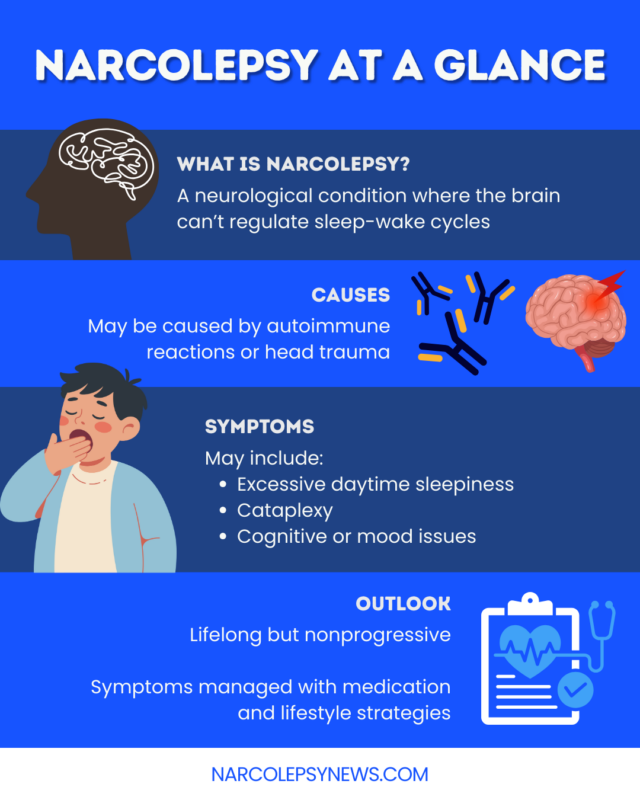
In narcolepsy, the brain has trouble regulating sleep-wake cycles. The usual boundary between sleep and wakefulness is blurred, so aspects of sleep intrude into waking hours.
In particular, a phase of sleep called rapid eye movement (REM) sleep becomes dysregulated. Normally, a person repeatedly cycles through four sleep stages throughout the night. The last one is REM, a period of high brain activity and vivid dreaming.
The first REM period usually is reached about an hour to 1.5 hours after falling asleep, but people with narcolepsy often fall into REM very early, within about 15 minutes, leading to profoundly dysregulated sleep cycles. Aspects of REM sleep, like muscle paralysis and dream-like hallucinations, happen when a person with narcolepsy is awake or partially awake.
Causes of narcolepsy
In most cases, narcolepsy is thought to be an autoimmune disease in which the immune system mistakenly attacks and destroys nerve cells that produce hypocretin, a signaling molecule needed to properly regulate sleep-wake cycles.
It is not known exactly why this abnormal immune activity occurs, but genetic and environmental risk factors are likely involved. A genetic variant called HLA-DQB1*06:02 is heavily implicated in narcolepsy risk. In genetically susceptible people, factors that may contribute to disease onset include:
- infections
- hormonal changes
- major psychological stress
- sleep deprivation
- age
Rarely, narcolepsy is caused by another condition or injury that directly damages brain regions involved in sleep regulation. In some cases, the exact narcolepsy causes are not known.
Narcolepsy symptoms
The symptoms of narcolepsy usually emerge between the ages of 10 and 30. The hallmark symptom is excessive daytime sleepiness (EDS), characterized by an irresistible feeling of sleepiness during the day, regardless of how much sleep a person got the previous night.
This can lead to sleep attacks, where a person falls asleep wherever they are, even during daily activities like talking or eating.
Other common narcolepsy symptoms include:
- cataplexy, a sudden, brief loss of muscle tone
- sleep paralysis, a temporary inability to move or speak during sleep-wake transitions
- hallucinations, vivid or bizarre dream-like perceptions when waking up or falling asleep
- disrupted nighttime sleep, including shorter and more fragmented REM periods, waking up frequently, and feeling unrefreshed when waking up in the morning
- cognitive issues, including brain fog, difficulty concentrating, and memory problems
- mood changes, including irritability, low motivation, or depression
Types of narcolepsy
The two main types of narcolepsy are:
- Type 1 narcolepsy: Also called narcolepsy with cataplexy. Characterized by a near-complete loss of hypocretin-producing nerve cells, believed to be caused by autoimmune reactions. This is generally the more severe disease type, and cataplexy always occurs.
- Type 2 narcolepsy: Hypocretin levels are usually normal, and while autoimmunity may be involved, the exact causes are not known. May be less severe, and cataplexy is usually absent.
When narcolepsy is directly caused by a head trauma or other brain injury, it’s known as secondary narcolepsy. This type is often associated with prolonged sleep at night and other neurological symptoms related to the brain injury.
Narcolepsy diagnosis
The first step toward a narcolepsy diagnosis is usually a careful review of symptoms. Patients may be asked to keep a sleep diary for a couple of weeks to track their sleep patterns and symptoms. If narcolepsy is suspected, two key tests need to be run:
- Polysomnography (sleep study): Uses sensors to monitor brain activity, heart rate, breathing, and muscle movements during overnight sleep. Can track how a person cycles through sleep stages and rule out other conditions that cause sleepiness.
- Multiple sleep latency test (MSLT): Uses sensors to evaluate how quickly a person falls asleep during scheduled naps throughout the day.
For narcolepsy to be diagnosed, there must be evidence of daily EDS that has lasted for at least three months and has no other explanation, along with certain hallmarks of narcolepsy observed on the MSLT test. A type 1 narcolepsy diagnosis also requires the presence of either cataplexy or low hypocretin levels.
Narcolepsy treatment
Narcolepsy treatment involves a combination of medications and lifestyle adjustments. The specific type of medications will depend on various factors, but may include:
- Wake-promoting agents: Medications taken in the morning to boost alertness. Often, a first-line approach for managing EDS.
- Orzeyful (oveporexton): Orzeyful is an oral therapy approved for the treatment of adults with type 1 narcolepsy. It is intended to replace the wake-promoting actions of orexin, a missing brain signaling chemical in people with this disorder.
- Oxybates: Medications taken at night to improve overnight sleep quality, indirectly easing daytime sleepiness and cataplexy.
- Traditional stimulants: Medications that increase alertness and ease EDS, but may come with more side effects than newer wake-promoting agents.
- Antidepressants: These medications are sometimes used off-label to manage cataplexy and other narcolepsy symptoms, but because they aren’t formally approved for narcolepsy, there are no established guidelines on their use.
Along with medications, narcolepsy management may involve lifestyle modifications.
How common is narcolepsy?
Narcolepsy is estimated to affect around 1 in 2,000 people worldwide, or about three million people. Around 200,000 people in the U.S. are estimated to be living with narcolepsy.
However, researchers believe that this may be an underestimate because the disease commonly goes undiagnosed or misdiagnosed.
Tips for living with narcolepsy
Narcolepsy is a lifelong disorder with no cure currently. While the disease can substantially interfere with daily life, there are ways to limit its impact. Tips for living with narcolepsy include:
- taking all medications as prescribed and regularly following up with care providers
- keeping a consistent sleep schedule and maintaining healthy sleep habits
- following a diet and exercise plan that gives the body enough energy
- talking with a doctor about whether activities like driving are safe, and avoiding such activities during periods of sleepiness
- requesting school or workplace accommodations as needed, like a quiet place for naps
- avoiding caffeine, alcohol, and large meals before bed
- quitting smoking
- taking regularly scheduled short naps to control sleepiness
Because narcolepsy can take an emotional toll, patients and caregivers may choose to join a support group to connect with others who understand the challenges of living with the sleep disorder.
Narcolepsy News is strictly a news and information website about the disease. It does not provide medical advice, diagnosis, or treatment. This content is not intended to be a substitute for professional medical advice, diagnosis, or treatment. Always seek the advice of your physician or other qualified health provider with any questions you may have regarding a medical condition. Never disregard professional medical advice or delay in seeking it because of something you have read on this website.