
This October, let’s ghost stigma, silence, and the healthcare divide
I'm challenging the sleep health community to ghost the things that haunt us
Written by |


October brings ghosts, goblins, and things that go bump in the night. But for those of us living with narcolepsy and other sleep disorders, some of the scariest things aren’t hiding in haunted houses. They follow us into doctors’ offices, workplaces, classrooms, and everyday conversations. I’m talking about stigma, silence, and the healthcare divide.
As someone living with type 1 narcolepsy and cataplexy, I know sleep disorders affect far more than our ability to stay awake. They can influence our independence, relationships, confidence, and how others perceive us. Sometimes, the hardest part isn’t explaining our symptoms. It’s convincing people that what we’re experiencing is real.
This October, I’m challenging fellow patients, families, sleep advocates, nonprofit organizations, physicians, and sleep specialists to join me in ghosting the things haunting our sleep health community.

Ghosting the stigma
“You’re just lazy.”
“Everyone gets tired.”
“Have you tried going to bed earlier?”
If I had a dollar for every misconception about sleep disorders, perhaps I could fund a few more awareness campaigns!
We laugh because humor can help us cope. But beneath those comments lies a serious problem. Narcolepsy, idiopathic hypersomnia, sleep apnea, and other sleep disorders are real medical conditions, not character flaws.
Living with narcolepsy means navigating symptoms that others may never see or understand. Excessive daytime sleepiness doesn’t disappear because we have an important meeting or a family celebration. Cataplexy can cause sudden muscle weakness triggered by emotions, turning an ordinary moment of laughter into a frightening experience.
Yet people with sleep disorders are often expected to push through or simply get more sleep.
We deserve better.
Ghosting stigma means replacing assumptions with questions, judgment with compassion, and misinformation with education. It means recognizing that someone can look healthy while struggling behind the scenes.
Let’s ghost the stereotypes, not the people living with these conditions.
Ghosting the silence
Receiving a diagnosis is only one chapter of the story. Finding effective treatment, navigating appointments, managing symptoms, and explaining an invisible condition can bring ongoing challenges.
Sometimes we stay quiet because we’re tired of explaining ourselves. Sometimes we fear judgment. Other times, we simply don’t have the energy to turn every misunderstanding into an educational opportunity.
I understand that exhaustion.
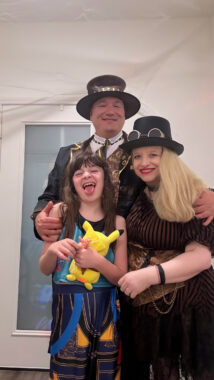
Clockwise from right, Rachel Nesmith, Savannah Harrison, and Kerry Harrison are ghosting the stigma, silence, and healthcare divide surrounding narcolepsy on Halloween and beyond. (Courtesy of Rachel Nesmith)
As a patient advocate and storyteller, I’ve learned how powerful it can be when people share their experiences. Personal stories help others recognize symptoms, feel less alone, and find the courage to seek answers.
A textbook can describe cataplexy. A patient can explain what it feels like when laughter triggers sudden muscle weakness during an ordinary conversation. Both perspectives matter.
Patients aren’t the only ones with stories worth hearing. Caregivers can share the challenges of supporting loved ones, while healthcare professionals can help translate medical knowledge into practical education.
Of course, nobody should feel pressured to share private medical experiences publicly. Advocacy should create opportunities for people to speak, not demand that they do.
This October, let’s listen without judgment, amplify patient voices, and make room for honest conversations.
Silence shouldn’t be the price people pay to feel accepted.
Ghosting the healthcare divide
Patients, families, physicians, sleep specialists, researchers, and nonprofit organizations may share the goal of improving sleep health, but good intentions alone don’t guarantee collaboration.
Patients can feel unheard. Families may struggle to understand what their loved ones experience. Healthcare professionals have demanding responsibilities, while advocates work to educate communities and connect people with resources.
We need to bring these perspectives together.
Patients contribute lived experience. Families offer valuable observations and support. Physicians and sleep specialists bring clinical expertise. Researchers investigate unanswered questions, while nonprofit organizations and advocates provide education, community, and resources.
These roles are different, but they complement one another.
Ghosting the healthcare divide means encouraging respectful partnerships where patients are heard, questions are welcomed, and care decisions are made collaboratively. It means supporting research that addresses meaningful patient needs and making reliable information accessible to families, schools, employers, and healthcare professionals.
Patients aren’t merely recipients of healthcare. Our experiences and perspectives can help improve it.
Better communication. Greater awareness. More patient-centered care.
That’s a future worth fighting for.
Let’s make October less spooky
Halloween reminds us that shining a light on something frightening can help us understand it. Misconceptions can be challenged, isolation can be interrupted, and partnerships can grow stronger.
But awareness shouldn’t disappear when the pumpkins come down.
Whether you’re living with narcolepsy, parenting a child with a sleep disorder, supporting a loved one, treating patients, conducting research, or advocating for change, you have a place in this conversation.
You don’t need a huge platform to make a difference. You can correct a misconception, share a reliable resource, listen to someone’s experience, or help someone feel less alone.
So, sleepy peeps, here’s my October challenge: What are you ghosting this month? Are you ghosting the stigma that labels us lazy, the silence that keeps our stories hidden, or the healthcare divide that prevents us from working together?
Let’s give the boot to stigma, silence, and division. Nobody should have to fight a sleep disorder and the stigma surrounding it.
Note: Narcolepsy News is strictly a news and information website about the disease. It does not provide medical advice, diagnosis, or treatment. This content is not intended to be a substitute for professional medical advice, diagnosis, or treatment. Always seek the advice of your physician or another qualified health provider with any questions you may have regarding a medical condition. Never disregard professional medical advice or delay in seeking it because of something you have read on this website. The opinions expressed in this column are not those of Narcolepsy News or its parent company, Bionews, and are intended to spark discussion about issues pertaining to narcolepsy.

Leave a comment
Fill in the required fields to post. Your email address will not be published.