
A recent conference reminded me that narcolepsy affects the whole family
Reflecting on how our loved ones help us keep moving forward
Written by |


I am a wife, a mother, a singer-songwriter, and a narcolepsy advocate. I have built a life I am proud of while living with type 1 narcolepsy and cataplexy. Still, when my mom, Susan Nesmith, looks at me, I know there is a part of her that still sees the little girl she has always loved, protected, and worried over.
That is one of the most tender truths about being loved.
On Oct. 2, I attended Wake Up Narcolepsy’s Bridging Perspectives event in Dallas with my mom and my mother-in-law, Janie Harrison. I arrived looking forward to connecting with clinicians, researchers, nonprofit leaders, students, and advocates. I left thinking just as much about the families and loved ones who walk beside us when life with narcolepsy is difficult.
Narcolepsy doesn’t affect only the person who receives the diagnosis. It also touches the people who love them, too.

Once a parent, always a parent
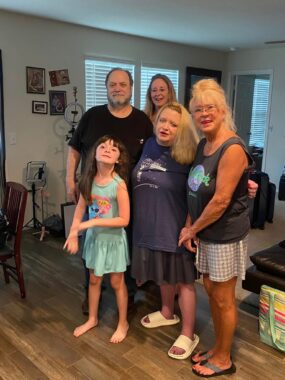
Columnist Rachel Nesmith, 2nd from right, is joined by her daughter, Savannah Harrison, front left, her parents, David and Susan Nesmith, back row, and her mother-in-law, Janie Harrison, right, on World Narcolepsy Day 2024. (Photo by Kerry Harrison)
Whether someone is diagnosed as a child, a teenager, or an adult (perhaps finally receiving answers after years of unexplained exhaustion), the diagnosis reaches beyond them. Parents worry. They wonder whether their child will be understood at school, taken seriously by medical providers, supported by teachers, included by friends, and given the chance to pursue the life they dream about.
I know that kind of worry because I have seen it in my own family.
My mom has witnessed the ups and downs of my life with narcolepsy and cataplexy. She knows that an ordinary day can sometimes require extraordinary effort. She has watched me struggle, adjust, rest, try again, and keep going.
I am grown, but I am still her daughter. That will never change.
That truth felt even more meaningful at Bridging Perspectives because my mother-in-law was there as well.
Janie didn’t have to attend an event about narcolepsy. She came because she cares about me and wants to understand the disorder that shapes parts of my daily life.
I’m blessed with two moms who care enough to listen, learn, and show up. I am also grateful for my husband and the life we’ve built together. Their love doesn’t take narcolepsy away, but it does remind me that I don’t have to face it alone.
Giving our kids wings to fly
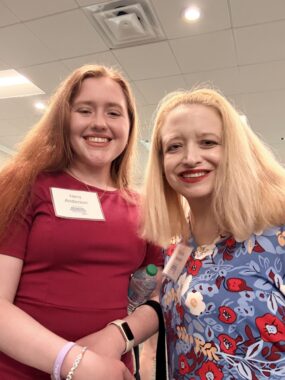
Rachel Nesmith, right, meets Hero Anderson, a college student excelling in life. Living with type 1 narcolepsy since the age of 9, Hero genuinely lives up to her name. (Courtesy of Rachel Nesmith)
One of the most meaningful moments of the event was hearing Hero, who is Wake Up Narcolepsy Executive Director Tammy Anderson’s daughter, share what it’s been like to live with narcolepsy since age 9. Her story was a powerful reminder that children may experience this condition long before they have the language, confidence, or support to fully explain what is happening in their bodies.
For children and teenagers living with narcolepsy, with or without cataplexy, and for those living with idiopathic hypersomnia, support can make all the difference. Young people deserve parents who listen, teachers who are willing to learn, doctors who take their symptoms seriously, and communities that see their abilities instead of defining them by their limitations.
Helping a child live with a chronic sleep disorder isn’t about shrinking their world to protect them from every hard thing. It’s about helping them build the tools, confidence, accommodations, and courage they need to move through that world with support.
We can’t promise our children a life without bumps in the road. But we can give them wings to fly over some of those bumps, navigate others, and keep moving toward the life they want.
But that message isn’t just for children; it’s for adults, too.
A diagnosis doesn’t mean dreams have expired. It doesn’t mean someone can’t fall in love, marry, become a parent, build a career, make music, advocate for others, or contribute something meaningful to the world.
Our paths may look different. We may need accommodations, medication, rest, help, or more flexibility than we expected. But different doesn’t mean less. With understanding, education, and love, people living with narcolepsy can continue moving forward — not alone, but supported by the people who choose to walk beside them.
Note: Narcolepsy News is strictly a news and information website about the disease. It does not provide medical advice, diagnosis, or treatment. This content is not intended to be a substitute for professional medical advice, diagnosis, or treatment. Always seek the advice of your physician or another qualified health provider with any questions you may have regarding a medical condition. Never disregard professional medical advice or delay in seeking it because of something you have read on this website. The opinions expressed in this column are not those of Narcolepsy News or its parent company, Bionews, and are intended to spark discussion about issues pertaining to narcolepsy.


Leave a comment
Fill in the required fields to post. Your email address will not be published.