
AI model uses fingertip sensor to measure daytime sleepiness
Analysis of pulse recordings may offer simple way to track patient data
Written by |
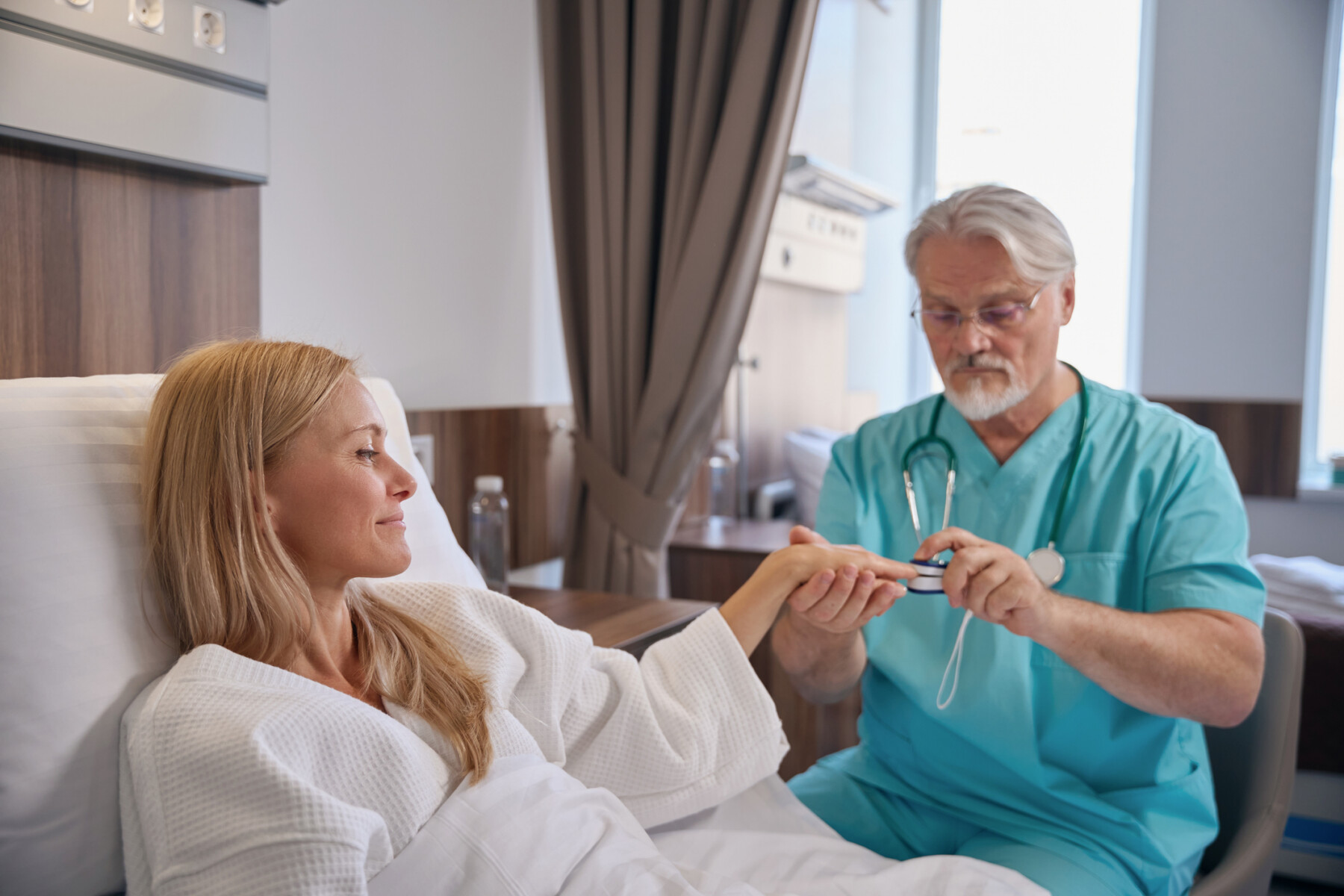
A fingertip sensor could be a simple way to measure daytime sleepiness. (Photo by iStock)
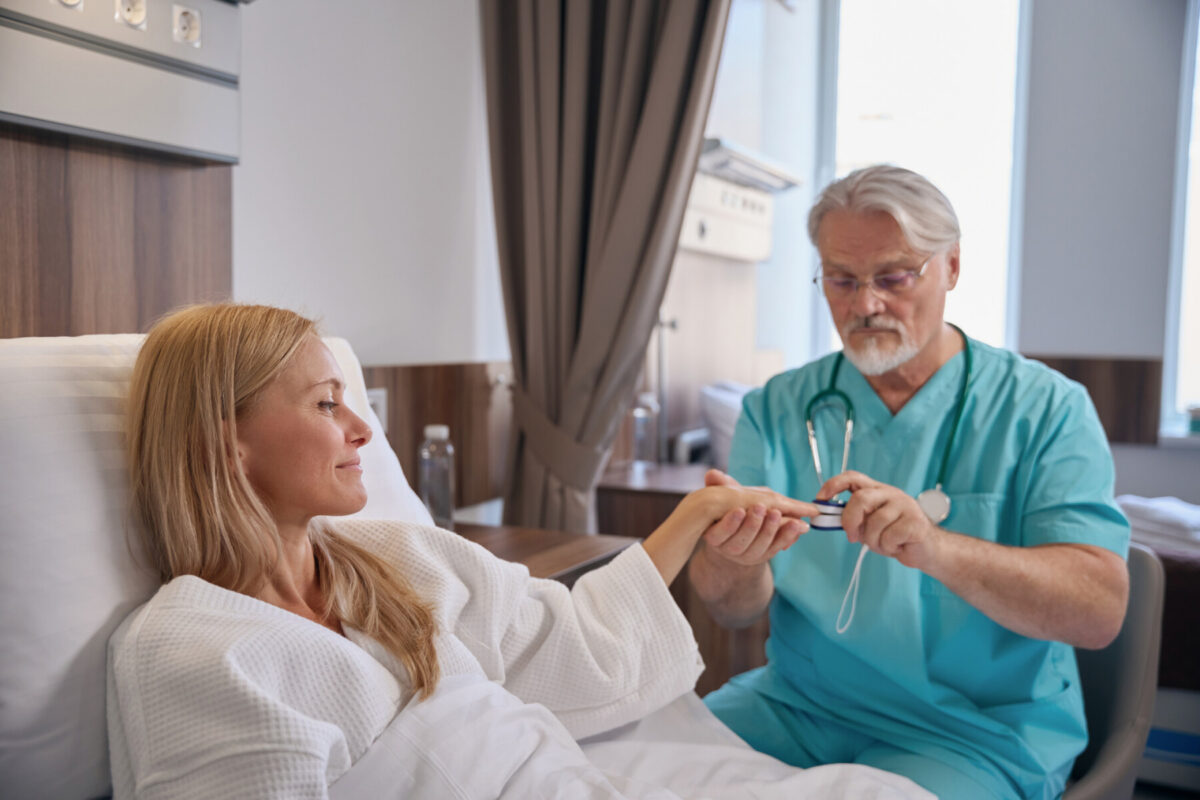
Artificial intelligence (AI) analysis of fingertip pulse recordings may offer a simple, objective way to assess excessive daytime sleepiness in people with sleep disorders such as narcolepsy, a study suggested.
The approach uses photoplethysmography (PPG), a technique that uses a light-based sensor to detect changes in blood volume with each heartbeat. Researchers tested whether deep learning, a type of AI that can learn complex patterns from large amounts of data, could use fingertip pulse changes to detect sleep and estimate how quickly someone falls asleep during standard daytime tests.
The pulse-based model correctly classified about 80% of participants as objectively sleepy or not sleepy in both tests. However, it missed roughly one-third of sleepy participants and struggled to detect brief sleep during a test in which participants tried to stay awake.
“Fingertip pulse wave analysis combined with deep learning shows feasibility for automated assessment of daytime sleepiness,” the researchers wrote, adding that further refinement and validation are needed before such a model is ready for clinical use.
The study, “Deep Learning-Based Assessment of Sleepiness from Fingertip Pulse Wave Analysis During Objective Daytime Testing,” was published in Annals of Biomedical Engineering.

Understanding EDS
Excessive daytime sleepiness (EDS) is the hallmark symptom of narcolepsy and can also occur in other sleep disorders. It can interfere with work, driving, and everyday activities. Objectively assessing its severity can help doctors diagnose sleep disorders, understand safety risks, and determine whether a treatment is working.
Two standard assessments are the Multiple Sleep Latency Test (MSLT), which measures how quickly someone falls asleep during daytime naps, and the Maintenance of Wakefulness Test (MWT), which measures how long someone can stay awake in a quiet setting.
Both tests require specialized equipment, continuous supervision by trained sleep technicians, and expert interpretation, generally limiting their availability to specialized sleep centers.
“There is an urgent need for an easy-to-use and low-cost test for assessing objective sleepiness,” the researchers wrote. “Ideally, such a test should be easily integrated into routine clinical workflows and enable evaluation of sleepiness beyond highly specialized laboratories.”
One possibility is to look at what happens in the body as someone drifts off to sleep. Alongside changes in brain activity, falling asleep brings changes in heart and blood vessel activity that fingertip PPG sensors may capture.
To see whether fingertip pulse signals could help measure daytime sleepiness, researchers developed and evaluated a deep learning model using 2,297 overnight sleep recordings from people being evaluated for suspected sleep disorders. They then tested it, without additional training, on daytime recordings from 143 people who underwent the MSLT and 127 who underwent the MWT in Grenoble, France.
Each test involved four sessions throughout the day. During the MSLT, participants had up to 20 minutes to fall asleep, while during the MWT, they were asked to stay awake for up to 40 minutes. The researchers first checked whether the model could distinguish sleep from wakefulness, comparing its predictions with sleep specialists’ assessments.
During MSLT, the model did so correctly 81% of the time. It was less reliable during the MWT, however. Although its overall accuracy reached 88%, participants spent 98% of the recording time awake, meaning the model could appear highly accurate simply by identifying most periods as wakefulness.
The model detected about 72% of the seconds scored as sleep during MWT. Yet only about 10% of the seconds it labeled as sleep were confirmed by standard scoring, meaning it frequently mistook wakefulness for sleep.
The researchers suggested that quietly relaxing while trying to stay awake may produce pulse changes that resemble those seen during sleep, even when brain activity still indicates wakefulness.
Next, the team checked whether the model could estimate mean sleep latency — the mean time taken to fall asleep across the day’s tests. Its estimates significantly correlated with measurements obtained through standard testing. The average absolute difference between the two methods was 3.2 minutes during MSLT and 7.9 minutes during MWT.
The team then used these estimates to identify sleepy participants, defined as those with a mean time to fall asleep lower than eight minutes during MSLT or 19 minutes during MWT.
The model matched standard classifications with 80% accuracy during MSLT and 83% during MWT. However, it incorrectly classified about one-third of sleepy participants as not sleepy — 34% during MSLT and 38% during MWT.
The researchers noted that the model was trained on overnight sleep recordings and was not adapted for daytime testing. Because the body’s responses differ in nighttime sleep, daytime naps, and quiet wakefulness, the researchers suggested that training the model specifically on daytime data could improve its performance.
“We found that deep learning-based assessment of sleep latency from the fingertip pulse wave provides reasonable accuracy for detecting sleepiness in MSLT and MWT studies,” the researchers wrote. “These approaches could not only enhance the efficiency of sleep laboratories but also potentially revolutionize the accessibility of these tests beyond specialized sleep centers.”



Leave a comment
Fill in the required fields to post. Your email address will not be published.