
Samelisant for narcolepsy
 Fact-checked by
What is samelisant for narcolepsy?
Samelisant, also known as SUVN-G3031, is an experimental oral therapy being developed by Suven Life Sciences for the treatment of people with narcolepsy.
Narcolepsy is a neurological condition in which the brain doesn’t properly regulate sleep-wake cycles. Aspects of sleep intrude into waking hours, leading to uncontrollable sleepiness during the day, sudden loss of muscle tone (cataplexy), and other symptoms.
Samelisant is designed to combat these symptoms by boosting the brain’s production of histamine, a signaling molecule that promotes wakefulness. The body has natural mechanisms for regulating the amount of histamine produced. Samelisant essentially releases this brake, allowing more of the chemical to be made.
A proof-of-concept Phase 2 trial that tested the therapy in people with narcolepsy has already been completed. A Phase 3 trial testing samelisant for excessive daytime sleepiness in narcolepsy is expected to launch in 2026. The company has also indicated plans for a separate Phase 2 trial to specifically look at the treatment’s effects on cataplexy.
Therapy snapshot
| Treatment name | Samelisant |
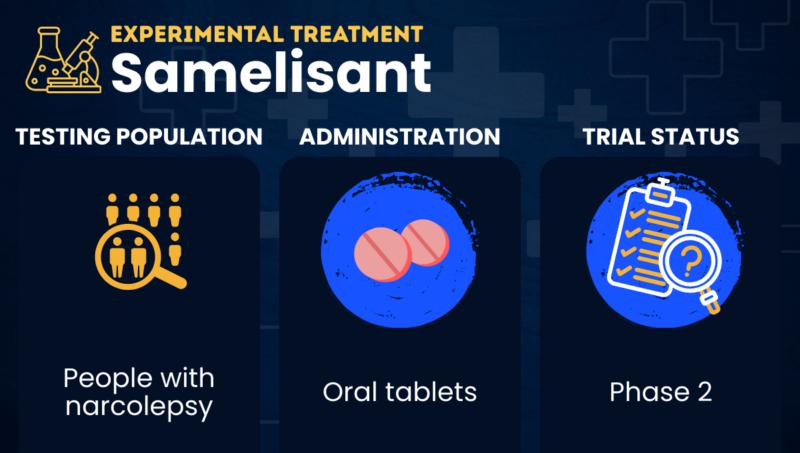
| Administration | Oral tablets |
| Clinical testing | Phase 2 trial completed; Phase 3 trial planned |
How will samelisant be administered in narcolepsy?
In a Phase 2 clinical trial involving people with narcolepsy, samelisant was administered in the form of oral tablets, taken once daily in the morning. Doses of 2 and 4 mg were tested.
Samelisant in narcolepsy clinical trials
A Phase 2 clinical trial (NCT04072380) evaluated the safety and efficacy of samelisant in adults with narcolepsy. Participants were randomly assigned to receive samelisant (2 or 4 mg) or a placebo once daily for two weeks.
Trial data showed that, relative to the placebo, either dose of samelisant led to:
- significant reductions in a patient-reported measure of daytime sleepiness
- significant reductions in clinician-rated symptom severity
- clinician- and patient-reported improvements in overall clinical status
No significant effect of samelisant on daily cataplexy rates was observed.
Samelisant side effects
In the Phase 2 trial, the most commonly reported side effects included:
- insomnia
- abnormal dreams
- nausea
- hot flushes
Most side effects were mild in severity. There were no serious treatment-emergent adverse events.
Narcolepsy News is strictly a news and information website about the disease. It does not provide medical advice, diagnosis, or treatment. This content is not intended to be a substitute for professional medical advice, diagnosis, or treatment. Always seek the advice of your physician or other qualified health provider with any questions you may have regarding a medical condition. Never disregard professional medical advice or delay in seeking it because of something you have read on this website.