
AXS-12 for narcolepsy
 Fact-checked by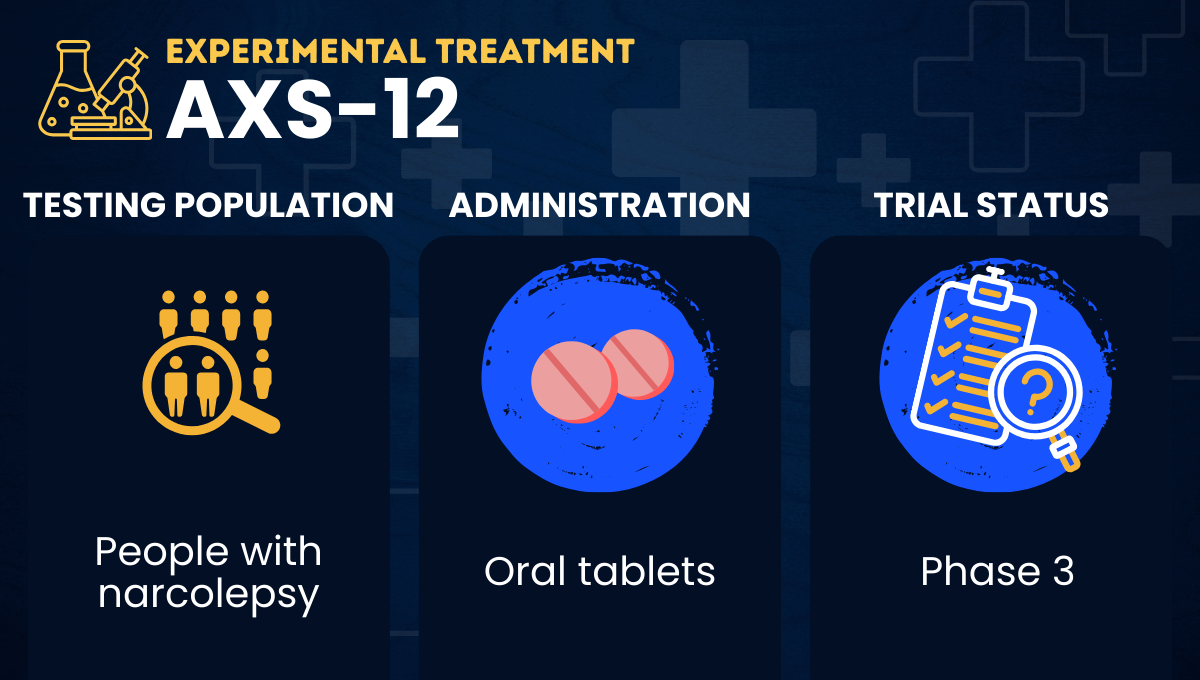
What is AXS-12 for narcolepsy?
AXS-12 (reboxetine) is an experimental oral therapy currently being developed as a treatment for narcolepsy.
Narcolepsy is a neurological condition that causes excessive daytime sleepiness, along with other symptoms. Many people with narcolepsy also experience cataplexy — a brief and sudden loss of muscle tone that can cause symptoms ranging from facial drooping to collapse.
AXS-12 aims to counteract changes in brain chemistry that contribute to sleepiness and cataplexy. It specifically enhances signaling with norepinephrine, a brain chemical that helps promote wakefulness and maintain muscle tone.
The active ingredient in AXS-12, reboxetine, is a selective norepinephrine reuptake inhibitor that blocks protein transporters in nerve cells that normally take up norepinephrine. This allows more of the molecule to be available in the brain at a time, enhancing norepinephrine’s effects.
AXS-12 is also thought to act as a dopamine modulator. This, together with its effects on norepinephrine signaling, is believed to further help promote wakefulness and enhance cognition.
Axsome Therapeutics, the therapy’s developer, plans to submit an application requesting the approval of AXS-12 for the treatment of narcolepsy in the U.S. in 2026. AXS-12 previously received U.S. orphan drug designation for this indication. This regulatory status provides incentives for the development of medications for rare diseases, like narcolepsy.
Therapy snapshot
| Treatment name | AXS-12 |
| Administration | Oral tablets |
| Clinical testing | Phase 3 testing completed |
How will AXS-12 be administered in narcolepsy?
In Phase 3 clinical trials involving people with narcolepsy, AXS-12 was administered in the form of oral tablets. The therapy’s dosage in these trials was 5 mg twice daily, although participants received a lower dose (5 mg once daily) during the first week of treatment. It isn’t yet known what the recommended dosage will be if the therapy receives approval.
AXS-12 in narcolepsy clinical trials
Several clinical trials tested AXS-12 in people who had narcolepsy with cataplexy:
- The Phase 2 CONCERT trial (NCT03881852) included 21 adults. Participants either received AXS-12 or a placebo for a few weeks, and then switched to the opposing regimen for a few weeks. During treatment with AXS-12, the number of weekly cataplexy episodes decreased from a mean of 30 to 17 — a significantly larger reduction compared with the placebo. AXS-12 also significantly decreased excessive daytime sleepiness and improved cognitive function and sleep quality.
- The Phase 3 SYMPHONY trial (NCT05059223) enrolled 90 participants ages 15 to 75. Half received AXS-12 for five weeks, while the other half received a placebo. By the end of the study, cataplexy attack frequency decreased by 83% in the AXS-12 group — a significantly larger reduction compared with the 66% decrease seen in the placebo group. The percentage of patients who were free from cataplexy attacks after five weeks of treatment was also significantly higher in the AXS-12 group (33% vs. 9.5%). As in CONCERT, measures of daytime sleepiness and cognition also improved significantly in the AXS-12 group.
- After SYMPHONY, participants were eligible to enter a follow-up Phase 3 trial called ENCORE (NCT05113745) to continue receiving AXS-12 for 24 weeks (about six months). The 68 participants who took part in this portion of the trial experienced long-term benefits from treatment with AXS-12. Then, 42 participants entered a second part of the trial, during which they either continued receiving AXS-12 or switched over to a placebo. After three weeks, the participants who had switched over to the placebo were having significantly more cataplexy attacks per week and performing more poorly on cognitive tests.
AXS-12 side effects
Across the three clinical trials testing AXS-12 in people with narcolepsy, the most commonly reported side effects included:
- anxiety
- constipation
- insomnia
- dry mouth
- nausea
- elevated heart rate (tachycardia)
Narcolepsy News is strictly a news and information website about the disease. It does not provide medical advice, diagnosis, or treatment. This content is not intended to be a substitute for professional medical advice, diagnosis, or treatment. Always seek the advice of your physician or other qualified health provider with any questions you may have regarding a medical condition. Never disregard professional medical advice or delay in seeking it because of something you have read on this website.