
Alixorexton for narcolepsy
 Fact-checked by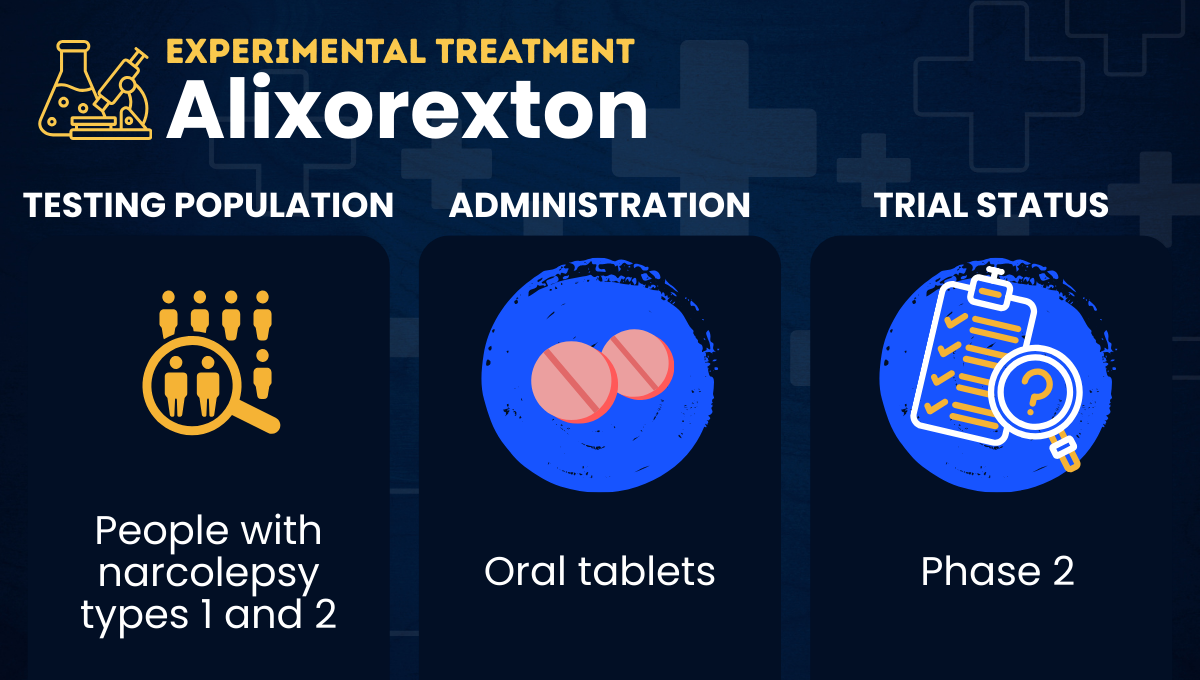
What is alixorexton for narcolepsy?
Alixorexton, formerly called ALKS 2680, is an experimental oral therapy currently in development for narcolepsy types 1 and 2.
Narcolepsy is a neurological condition that causes excessive daytime sleepiness and other symptoms. In narcolepsy type 1 (NT1), this is driven by the loss of nerve cells that produce the brain signaling molecule hypocretin (also known as orexin). Hypocretin helps regulate sleep-wake cycles, and its loss leads to sleep dysregulation and, often, episodes of cataplexy, or sudden loss of muscle tone. People with narcolepsy type 2 (NT2) typically have normal hypocretin levels and don’t experience cataplexy. Scientists don’t fully understand what causes NT2.
Alixorexton is designed to bind and activate the orexin 2 receptor, the protein that hypocretin normally interacts with to exert its effects. By doing so, the therapy is expected to help increase wakefulness and ease narcolepsy symptoms.
Alkermes is developing alixorexton as a treatment for the two main types of narcolepsy, as well as for another sleep disorder called idiopathic hypersomnia (IH). The company plans to initiate a global Phase 3 clinical program for narcolepsy in 2026.
Alixorexton received breakthrough therapy designation in the U.S. for the treatment of NT1, a regulatory status that could help expedite its development and review for potential approval.
Therapy snapshot
| Treatment name | Alixorexton |
| Administration | Oral tablets |
| Clinical testing | Phase 2 testing completed |
How will alixorexton be administered in narcolepsy?
In Phase 2 clinical trials involving people with narcolepsy, alixorexton was administered in the form of oral tablets taken once daily. For people with NT1, doses have ranged from 4 to 8 mg, while those with NT2 have received doses ranging from 10 to 18 mg. It isn’t yet known what the recommended dosages will be if the medication is ultimately approved.

Alixorexton in narcolepsy clinical trials
After a Phase 1b trial suggested that alixorexton is safe and promotes wakefulness in healthy volunteers and people with NT1, Alkermes initiated the Phase 2 Vibrance clinical trial program in narcolepsy and IH. Participants in each study were randomly assigned to four groups — three received different doses of alixorexton, and a fourth group was given a placebo. Investigators then assessed how long participants could stay awake and how sleepy they felt during daytime.
Two Vibrance trials focused on different narcolepsy populations:
- Vibrance-1 (NCT06358950) included 92 adults with NT1. The study lasted six weeks, and participants in the three alixorexton groups received doses of 4, 6, or 8 mg once daily. Top-line results showed a significant increase in the time participants could stay awake and a significant reduction in daytime sleepiness across all alixorexton doses compared with the placebo. Improvements in sleepiness metrics began as soon as week two and were sustained for at least 13 weeks, including a follow-up extension period. Treatment with alixorexton also reduced weekly cataplexy attack rates and led to improvements in patient-reported measures of disease severity, fatigue, and cognition.
- Vibrance-2 (NCT06555783) included 93 adults with NT2. The randomized dosing period lasted eight weeks, during which participants received 10, 14, or 18 mg of alixorexton or a placebo. According to Alkermes, there were clinically meaningful changes across all treatment groups in the time that participants could stay awake, which reached statistical significance in the 14 and 18 mg groups compared with the placebo group. Patients in the 18 mg group also saw a significant decrease in daytime sleepiness ratings over the eight weeks of treatment.
After completing the Vibrance trials, participants were eligible to continue receiving alixorexton for up to 100 weeks (about two years) in a long-term extension study (NCT06767683), which is still underway.
Based on data from Vibrance-1 and Vibrance-2, Alkermes is planning to initiate the Phase 3 Brilliance clinical trial program in narcolepsy in 2026. The 12-week studies will test once-daily and split-dose regimens of alixorexton. Main goals include assessing the therapy’s effects on the patients’ ability to stay awake and daytime sleepiness.
Alixorexton side effects
In Vibrance-1, the most common side effects seen in people with NT1 treated with alixorexton included:
- unusually frequent urination (pollakiuria)
- urinary urgency
- insomnia
- excessive saliva production
- blurred vision
The therapy’s safety profile was similar for people with NT2 in Vibrance-2, with the most common side effects including:
- pollakiuria
- urinary urgency
- insomnia
- dizziness
- headache
Narcolepsy News is strictly a news and information website about the disease. It does not provide medical advice, diagnosis, or treatment. This content is not intended to be a substitute for professional medical advice, diagnosis, or treatment. Always seek the advice of your physician or other qualified health provider with any questions you may have regarding a medical condition. Never disregard professional medical advice or delay in seeking it because of something you have read on this website.