
Lumryz (sodium oxybate) for narcolepsy
 Fact-checked by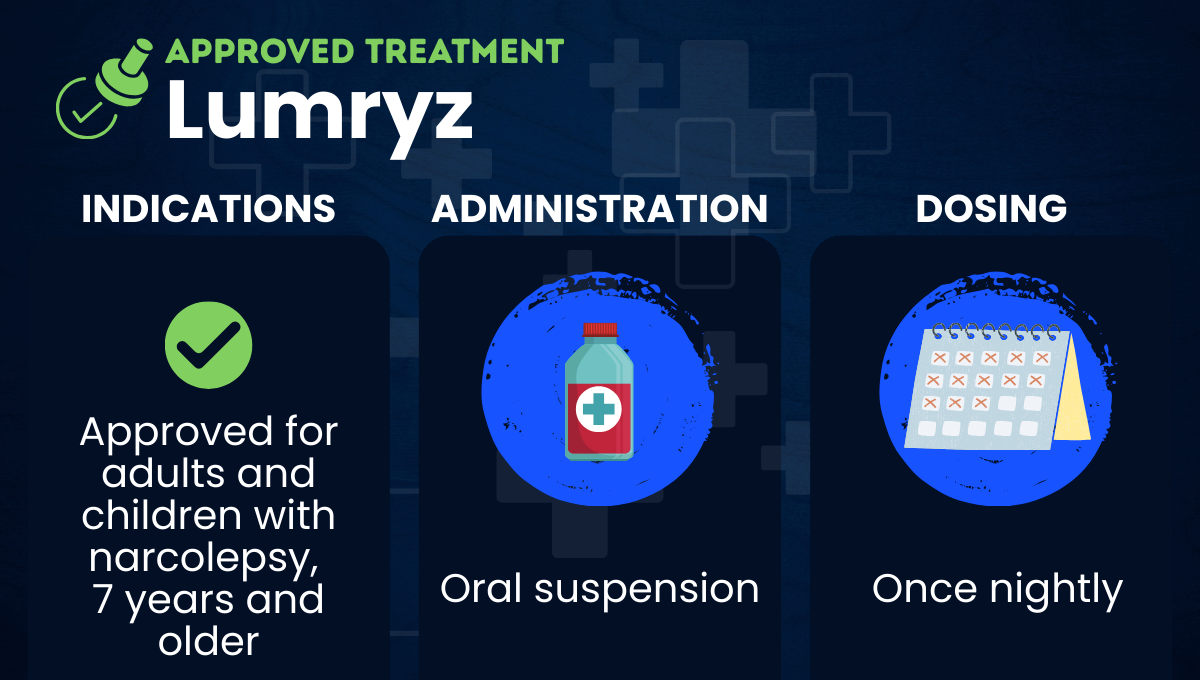
What is Lumryz for narcolepsy?
Lumryz (sodium oxybate) is an oral therapy from Avadel Pharmaceuticals that’s approved to manage excessive daytime sleepiness (EDS) or cataplexy in people with narcolepsy.
In narcolepsy, sleep-wake cycles aren’t regulated properly, leading to symptoms like EDS — an uncontrollable urge to sleep at all times of the day — and cataplexy, a sudden loss of muscle tone. Nighttime sleep is also disrupted and fragmented.
The active ingredient in Lumryz is sodium oxybate, a central nervous system (CNS) depressant that slows brain activity and has a strong sedative effect. Although its mechanisms in narcolepsy aren’t fully understood, sodium oxybate is believed to modulate brain signaling chemicals to improve the quality of nighttime sleep and stabilize sleep-wake cycles.
When a person has better, more restful nighttime sleep, it becomes less likely that sleep-related symptoms will spill over into waking hours, thereby helping to prevent EDS and cataplexy.
Other versions of sodium oxybate are approved in the U.S. for narcolepsy, but Lumryz is the only extended-release formulation. Because the effects of a single dose last longer in the body, Lumryz can be taken just once before bed, while other medications require waking up during the night for a second dose.
Therapy snapshot
| Brand name | Lumryz |
| Chemical name | Sodium oxybate |
| Usage | Used to treat excessive daytime sleepiness or cataplexy in people with narcolepsy |
| Administration | Oral suspension |
Who can take Lumryz?
In the U.S., Lumryz is approved for the treatment of cataplexy or EDS in people with narcolepsy who are 7 years or older.
It is contraindicated, or should not be used:
- in combination with sedative hypnotics — other CNS depressants with sedating and sleep-inducing properties — or alcohol
- in people with a very rare metabolic condition called succinic semialdehyde dehydrogenase deficiency, whose bodies would not be able to properly break down the medication
Even for eligible patients, Lumryz is available only through a restricted access program called Lumryz Risk Evaluation and Mitigation Strategy (REMS) because it comes with a boxed warning for very serious and potentially fatal risks:
- As a CNS depressant, Lumryz could lead to dangerously slow breathing, called respiratory depression, or a state of reduced consciousness and alertness.
- Lumryz is a version of gamma-hydroxybutyric acid (GHB), a potent sedative that is used illicitly for recreational purposes and has a high potential for abuse. Abuse or misuse of illicit GHB can cause life-threatening complications.
How is Lumryz administered?
Lumryz is taken as an oral liquid suspension once per night before bed. The medication comes in packets of granules that must be mixed in water using the provided mixing cup before administration.
The recommended dose is based on body weight:
- Adults and children weighing at least 45 kg (about 100 pounds): Lumryz should be started at a nightly dose of 4.5 grams. This may be increased at weekly intervals to a maximum of 9 grams per night, adjusted as needed based on efficacy and tolerability.
- Children weighing less than 45 kg: The recommended starting dose can’t be achieved with the available Lumryz dose strengths, so treatment should first be initiated with another sodium oxybate product. Thereafter, the maximum recommended maintenance dose of Lumryz is 6 grams per night for children weighing 20-29 kg (about 44-64 pounds) and 7.5 grams for children weighing 30-44 kg (about 65-97 pounds). There is insufficient information to recommend a dose for children weighing less than 20 kg.
Lumryz should be taken at least two hours after eating and within 30 minutes of mixing. Patients should take the medication while in bed and lie down after dosing, because Lumryz could cause a person to fall asleep abruptly without first feeling drowsy.
Lumryz in clinical trials
The U.S. approval of Lumryz for adults was largely supported by a Phase 3 clinical trial called REST-ON (NCT02720744). A total of 212 people with narcolepsy, 16 years and older, were assigned to receive either once nightly Lumryz or a placebo for 13 weeks. Trial results showed that:
- people on Lumryz were able to stay awake significantly longer during a daytime test than people on the placebo, reflecting a reduction in EDS
- the mean number of weekly cataplexy attacks was significantly reduced with Lumryz compared with the placebo
- significantly more people in the Lumryz group than in the placebo group were rated by their clinicians as very much or much improved
The medication’s approval for children was based on a Phase 3 trial (NCT02221869) of an immediate-release sodium oxybate formulation that involved 106 children with narcolepsy, ages 7-17. As in adults, sodium oxybate was associated with significant reductions in weekly cataplexy attacks and daily sleepiness compared with a placebo, as well as lower rates of clinician-perceived worsening of narcolepsy symptoms.
Lumryz side effects
The most common side effects of Lumryz in adults include:
- nausea and vomiting
- dizziness
- bedwetting
- headache
The most common side effects of Lumryz in children include:
- nausea and vomiting
- bedwetting
- headache
- dizziness
- appetite and weight loss
- sleepwalking
According to its boxed warning, Lumryz can cause clinically significant respiratory depression and reduced consciousness, especially if used with alcohol or other CNS depressant medications. Patients should inform their doctors of all other medications they are using, as dose reductions or discontinuation may be required.
People using Lumryz should not operate hazardous machinery, including driving, until their doctors and they agree it is safe to do so. They should also avoid activities that require complete mental alertness or motor coordination for at least six hours after taking the medication.
Abuse of illicit GHB can lead to serious complications, including seizures, life-threatening respiratory depression, decreased consciousness, coma, or death. Individuals will be carefully evaluated for a history of drug abuse and will be monitored for signs of GHB misuse or abuse throughout treatment.
Lumryz also comes with warnings for other potentially serious side effects, including:
- breathing problems during sleep, especially in people with compromised respiratory function or other risk factors
- depression and suicidal thoughts or related behaviors
- other behavioral or psychiatric issues, such as confusion or anxiety
- abnormal movements during sleep, including sleepwalking
Individuals using Lumryz will be carefully monitored for these complications when starting the medication and throughout treatment.
Lumryz also has a high sodium content, so its dosing should be carefully considered in people with existing cardiovascular and kidney problems.
Narcolepsy News is strictly a news and information website about the disease. It does not provide medical advice, diagnosis, or treatment. This content is not intended to be a substitute for professional medical advice, diagnosis, or treatment. Always seek the advice of your physician or other qualified health provider with any questions you may have regarding a medical condition. Never disregard professional medical advice or delay in seeking it because of something you have read on this website.