
Dextroamphetamine-amphetamine for narcolepsy
 Fact-checked by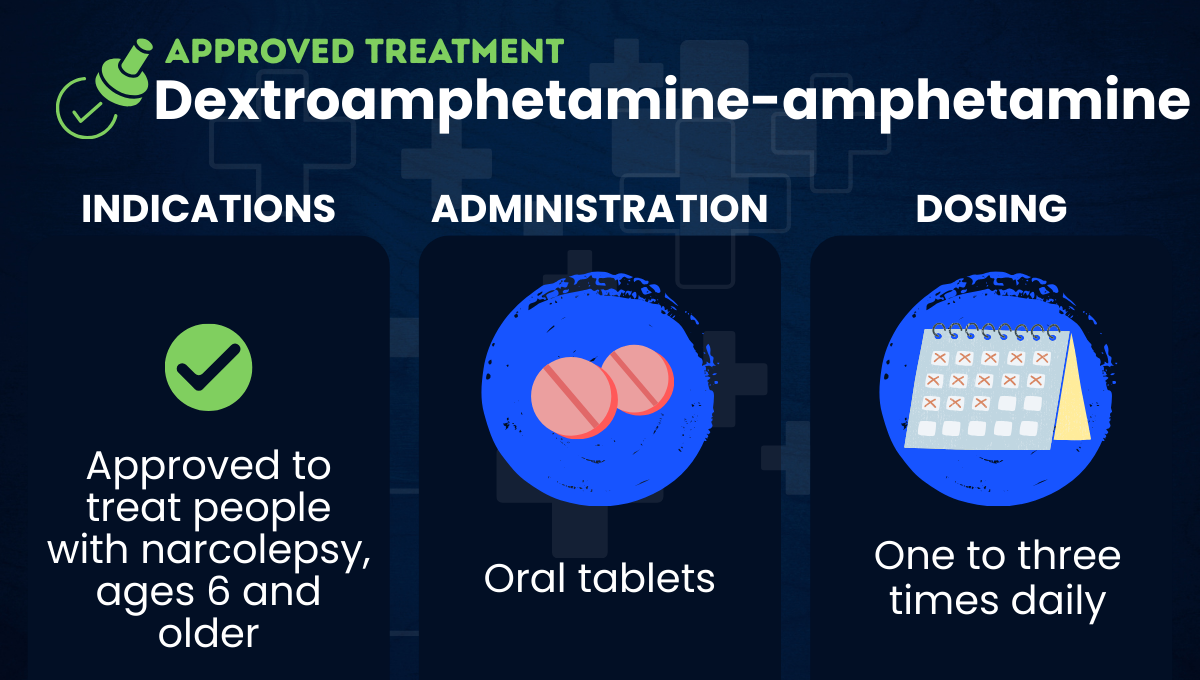
What is dextroamphetamine-amphetamine for narcolepsy?
Dextroamphetamine-amphetamine is an oral medication approved in the U.S. to treat people with narcolepsy.
In narcolepsy, the brain doesn’t properly regulate sleep and wakefulness, leading to excessive and uncontrollable daytime sleepiness.
Dextroamphetamine-amphetamine belongs to a class of medications called central nervous system (CNS) stimulants, which increase activity in the brain to help a person stay alert. It contains several forms of amphetamines that raise levels of wake-promoting brain signaling chemicals, helping reduce narcolepsy-related sleepiness.
The medication, available as oral tablets, was previously sold in the U.S. under the brand name Adderall. Several generic versions remain available. Dextroamphetamine-amphetamine is also used to treat attention-deficit hyperactivity disorder (ADHD).
Therapy snapshot
| Brand name | Only available as generics |
| Chemical name | Dextroamphetamine-amphetamine |
| Usage | Used to treat people with narcolepsy |
| Administration | Oral tablets |
Who with narcolepsy can take dextroamphetamine-amphetamine?
In the U.S., dextroamphetamine-amphetamine is approved to treat narcolepsy in people 6 and older. According to prescribing labels, its safety and effectiveness have not been established for children under 6 years old with narcolepsy.
The medication is contraindicated, or should not be used, in people who:
- are known to have hypersensitivity (immune reactions) to amphetamine or any ingredients in the medication
- are currently taking monoamine oxidase inhibitors, a class of antidepressants, or within two weeks of stopping them
It should also be avoided in people with serious heart problems.
Dextroamphetamine-amphetamine products carry boxed warnings about a high potential for abuse or misuse, which can lead to addiction, overdose, or death.
How is dextroamphetamine-amphetamine administered in narcolepsy?
Dextroamphetamine-amphetamine is available as oral tablets. The dose is adjusted based on a person’s needs and response, typically ranging from 5 mg to 60 mg per day.
The recommended starting dose is 10 mg in patients ages 12 and older and 5 mg for children ages 6-12. The dose may be gradually increased until the optimal effect is achieved.
The total daily dose may be divided into two or three smaller doses throughout the day. The first dose is taken upon awakening, with one or two additional doses taken every four to six hours. Late evening doses should be avoided because the medication may interfere with nighttime sleep.
Dextroamphetamine-amphetamine in narcolepsy clinical trials
Amphetamines have been used to treat narcolepsy since the 1930s. The approval of dextroamphetamine-amphetamine for narcolepsy was based largely on small studies and historical evidence rather than modern placebo-controlled clinical trials.
These studies generally showed that CNS stimulant medications can increase wakefulness and help prevent sleep attacks during the day in people with narcolepsy.
Dextroamphetamine-amphetamine side effects
The most common side effects of dextroamphetamine-amphetamine include:
- upset stomach
- decreased appetite
- nervousness
As a CNS stimulant, dextroamphetamine-amphetamine has a high potential for abuse or misuse. According to the boxed warning, this can lead to substance use disorder or addiction, which may result in overdose or death. That risk is higher when the medication is taken at higher-than-prescribed doses or used in unapproved ways, such as snorting or injection.
Patients should be carefully evaluated for their risk of abuse, misuse, or addiction before starting treatment and monitored regularly while taking the medication.
Other potentially serious risks associated with dextroamphetamine-amphetamine include:
- sudden death in people with heart problems
- increased blood pressure and heart rate
- new or worsening psychiatric problems
- long-term growth suppression in children
- seizures
- blood circulation problems
- tics — involuntary movements or sounds — or worsening of Tourette’s syndrome
Dextroamphetamine-amphetamine may interact with other medications. Using it with other treatments that affect the brain chemical serotonin can lead to a life-threatening condition called serotonin syndrome. Patients should tell their healthcare providers about all medications they are taking, as some combinations may require dose adjustments.
Narcolepsy News is strictly a news and information website about the disease. It does not provide medical advice, diagnosis, or treatment. This content is not intended to be a substitute for professional medical advice, diagnosis, or treatment. Always seek the advice of your physician or other qualified health provider with any questions you may have regarding a medical condition. Never disregard professional medical advice or delay in seeking it because of something you have read on this website.