
Dexedrine Spansule (dextroamphetamine sulfate) for narcolepsy
 Fact-checked by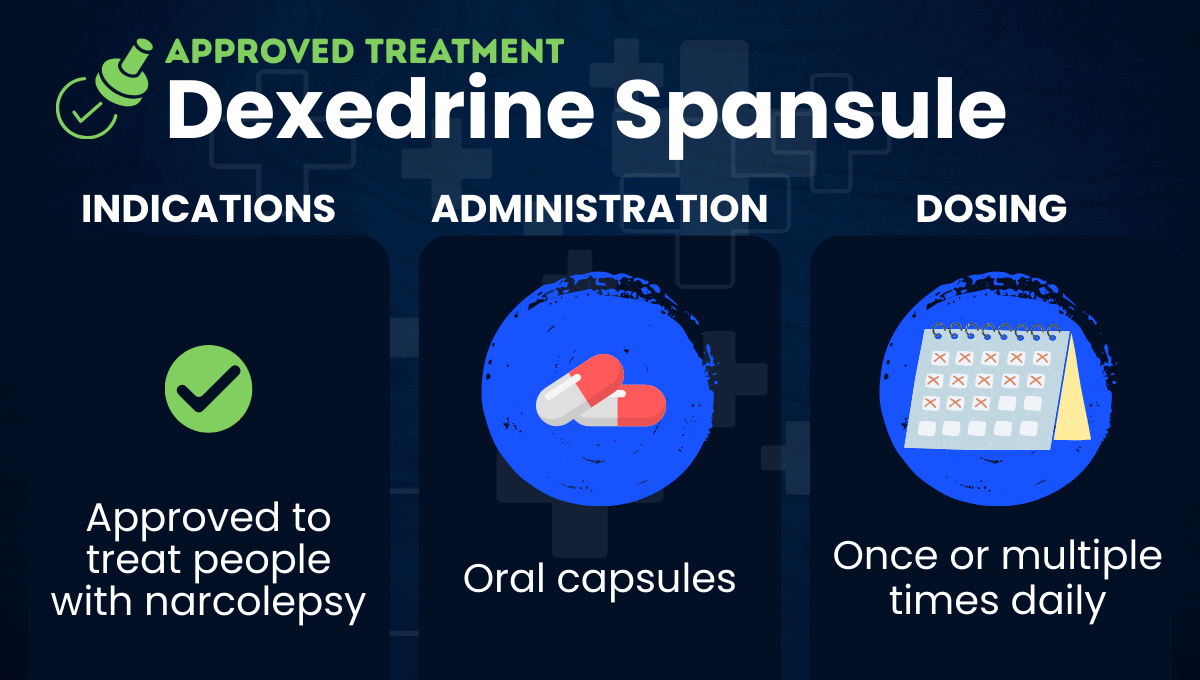
What is Dexedrine Spansule for narcolepsy?
Dexedrine Spansule (dextroamphetamine sulfate) is an oral medication approved in the U.S. to treat narcolepsy.
People with narcolepsy experience uncontrollable urges to sleep during the day because the brain cannot properly regulate sleep and wakefulness.
The active ingredient in Dexedrine Spansule is dextroamphetamine sulfate, a central nervous system (CNS) stimulant that promotes the release and prevents the recycling of wake-promoting signaling chemicals in brain regions that regulate sleep. Increasing levels of these chemicals helps improve alertness and reduce daytime sleepiness in people with narcolepsy.
Dexedrine Spansule comes as extended-release oral capsules. The brand-name medication is sold by Amneal Pharmaceuticals, and generic versions are also available.
Immediate-release forms of the medication, available as oral tablets or a liquid solution, were previously sold under the brand name Dexedrine, which has been discontinued in the U.S. However, generic versions of these formulations are still available.
Dextroamphetamine sulfate is also used to treat attention-deficit hyperactivity disorder (ADHD).
Therapy snapshot
| Brand name | Dexedrine Spansule |
| Chemical name | Dextroamphetamine sulfate |
| Usage | Used to treat people with narcolepsy |
| Administration | Oral capsules |
Who with narcolepsy can take Dexedrine Spansule?
In the U.S., Dexedrine Spansule is approved for the treatment of narcolepsy. It is not recommended for children under 6 years old.
Dexedrine Spansule is contraindicated, meaning it should not be used, in people:
- with a known history of hypersensitivity, a type of immune reaction, against any of its ingredients
- taking monoamine oxidase inhibitors, a class of antidepressant medications, or who have taken them in the last two weeks
The medication should also be avoided by people with serious heart conditions.
Dexedrine Spansule also carries a boxed warning about its high potential for abuse or misuse, which can lead to substance use disorder and addiction.
How is Dexedrine Spansule administered?
Dexedrine Spansule is available as extended-release oral capsules. The total daily dose typically ranges from 5 mg to 60 mg, depending on individual response. The recommended starting dose is 5 mg per day in children ages 6-12 and 10 mg per day for older patients. Doses may be increased at weekly intervals until an optimal response is reached.
The total daily dose may sometimes be divided into multiple doses, but as an extended-release formulation, Dexedrine Spansule is often taken once daily when appropriate.
With immediate-release formulations of dextroamphetamine sulfate, such as tablets or oral solution, the total daily dose is usually divided into one to three doses taken about four to six hours apart.
Dexedrine Spansule in narcolepsy clinical trials
Dexedrine Spansule has been used to treat narcolepsy since before modern clinical trial requirements were established. As a result, there are no large placebo-controlled clinical trials supporting its original approval.
The use of dextroamphetamine sulfate for narcolepsy is mainly supported by smaller, uncontrolled studies and case reports. These studies generally showed that dextroamphetamine helped reduce daytime sleepiness in people with narcolepsy.
Pharmacological studies have shown that Dexedrine Spansule’s extended-release formulation led to similar levels of the active ingredient in the body as the immediate-release formulations.
Dexedrine Spansule side effects
The most common side effects of Dexedrine Spansule include:
- fast heartbeat
- decreased appetite
- tremors
- headache
- insomnia
- dizziness
- upset stomach
- weight loss
- dry mouth
According to the boxed warning, misuse or abuse of CNS stimulants like Dexedrine Spansule can lead to overdose and death. This risk is higher with larger doses or unapproved methods of administration, such as snorting or injection.
Before starting Dexedrine Spansule, patients are evaluated for their risk of abuse, misuse, and addiction and monitored for these risks during treatment. The medication should be stored safely and never shared with others.
Individuals using Dexedrine Spansule should also be aware of other uncommon, but potentially serious complications, including:
- sudden death in people with existing heart problems
- increased blood pressure and heart rate
- new or worsening psychiatric problems
- slowed growth in children
- seizures
- circulation problems
- tics — involuntary movements or sounds — or worsening of Tourette’s syndrome
Taking Dexedrine Spansule with other medications that affect the brain signaling chemical serotonin can lead to a potentially life-threatening condition called serotonin syndrome. Patients should tell their healthcare providers about all medications they are taking, as certain combinations may require dose adjustments or closer monitoring.
Narcolepsy News is strictly a news and information website about the disease. It does not provide medical advice, diagnosis, or treatment. This content is not intended to be a substitute for professional medical advice, diagnosis, or treatment. Always seek the advice of your physician or other qualified health provider with any questions you may have regarding a medical condition. Never disregard professional medical advice or delay in seeking it because of something you have read on this website.