
Narcolepsy brain signals persist even with sleep apnea
Researchers map sleep profiles of patients with both conditions
Written by |
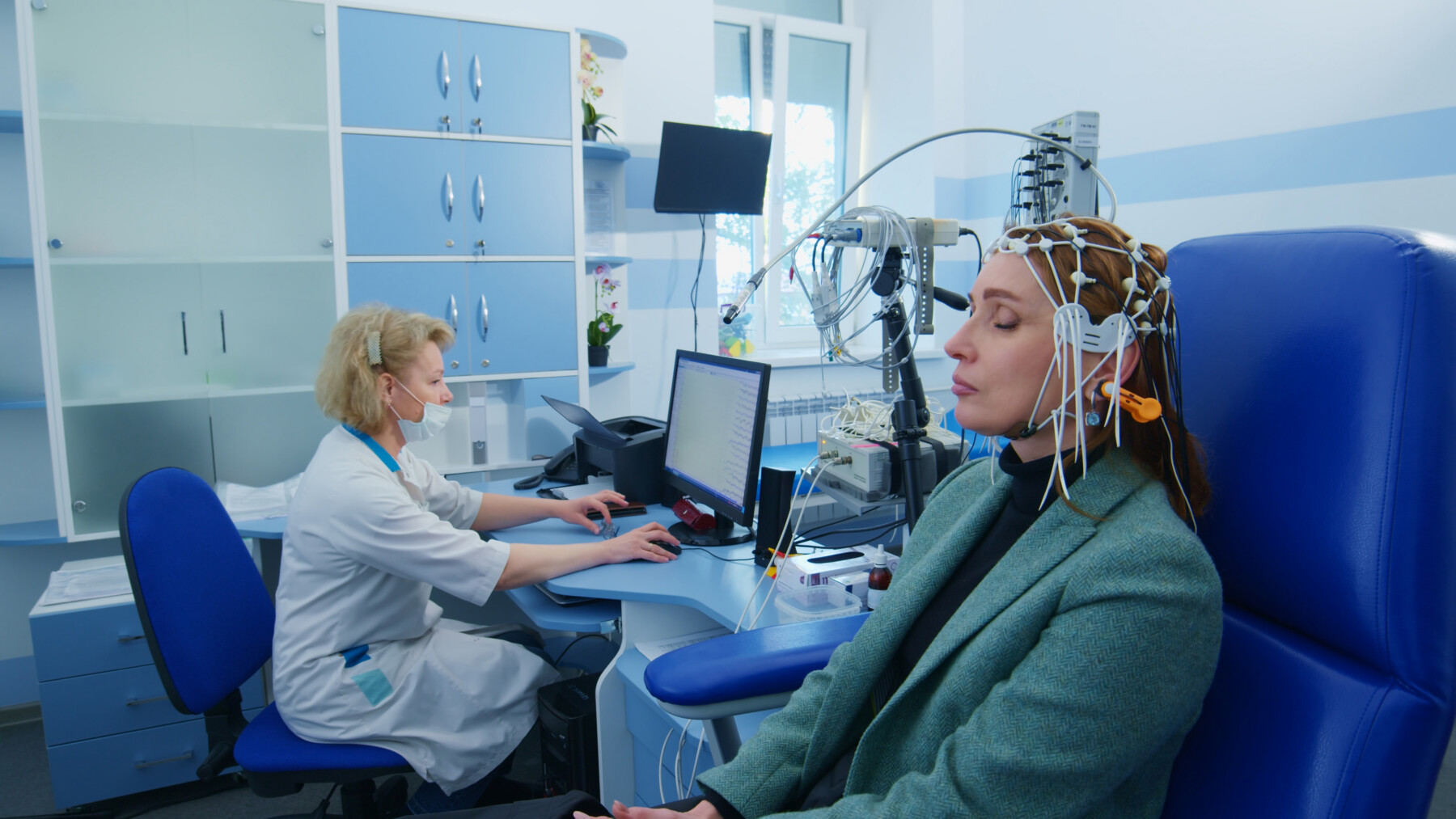
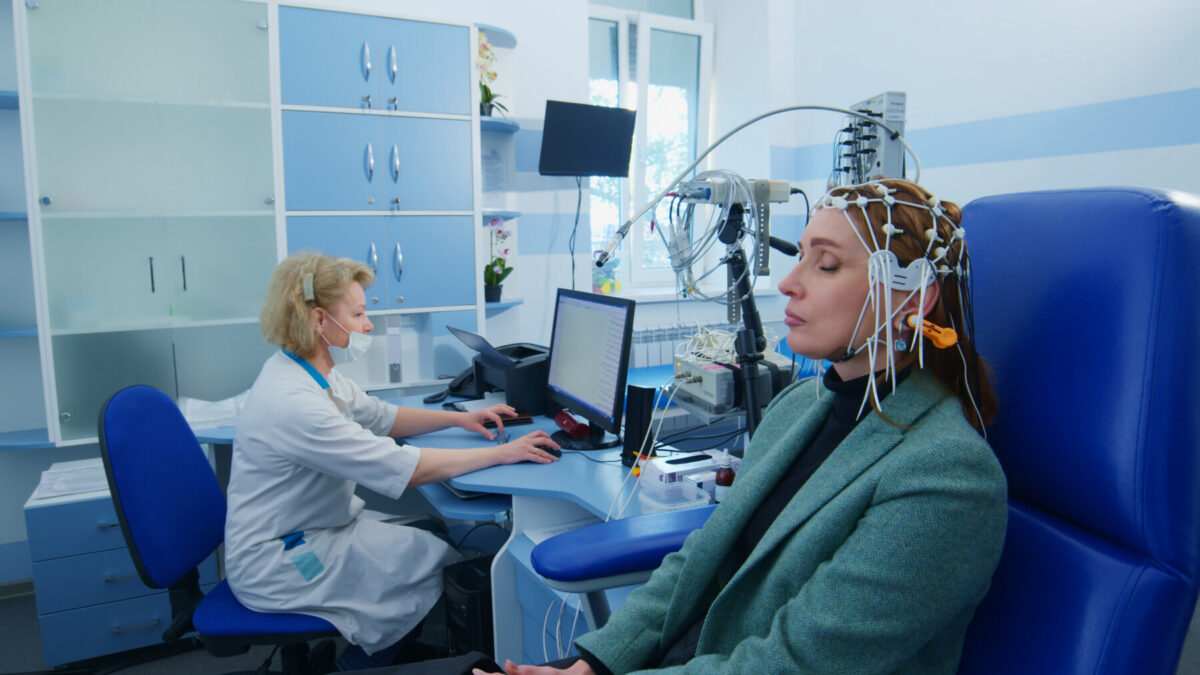
A study used EEG to measure narcolepsy and sleep apnea. (Photo by iStock)
In people with both narcolepsy and obstructive sleep apnea (OSA), abnormal patterns of brain activity are more similar to those seen in people with narcolepsy alone than those with OSA alone, according to a new study.
“[Co-occurring narcolepsy and OSA] exhibited a sleep EEG spectral profile more closely resembling that of [narcolepsy] than that of OSA,” the researchers wrote. “These spectral patterns warrant further evaluation for their potential role in the assessment of coexisting [narcolepsy] in patients with OSA.”
The study, “The sleep EEG spectral profile of narcolepsy with comorbid obstructive sleep apnea more closely resembles narcolepsy than obstructive sleep apnea,” was published in Sleep Medicine.
Narcolepsy and OSA are both disorders that affect sleep. Narcolepsy is marked by abnormal bouts of sleepiness during the day, often accompanied by other symptoms including problems sleeping at night. In OSA, breathing temporarily stops during sleep, causing the person to wake and disrupting sleep. These conditions often co-occur; studies suggest that as many as half of people with narcolepsy also have co-occurring OSA.

Findings give insight into co-existing conditions
Previous studies have shown that EEG (electroencephalogram) recordings — measures of the electrical activity in the brain — are altered in people who have narcolepsy. EEG abnormalities have also been reported in people with OSA. However, it hasn’t been clear how EEG patterns are altered in people with both narcolepsy and OSA, compared with people who have only one of the two conditions.
Scientists in China analyzed EEG recordings from 77 people with narcolepsy only, 110 people with OSA alone, and 37 people with both narcolepsy and OSA (abbreviated NT-OSA).
In comparisons among the three groups, the researchers found that EEG patterns were distinct among people with only narcolepsy or only OSA. For people with both diseases, EEG patterns largely resembled those seen in people with only narcolepsy. This was found for EEG recordings taken both at night and during the day.
“Together, these findings suggest that the spectral profile of NT-OSA more closely resembles that of [narcolepsy] than that of OSA,” the researchers wrote.
“These findings provide neurophysiological insight into NT-OSA and warrant further evaluation of these [EEG] patterns in the clinical assessment of coexisting [narcolepsy] in patients with OSA,” the scientists said. They noted that their study was limited to patients at one center and called for additional research to validate and expand on the findings.




Leave a comment
Fill in the required fields to post. Your email address will not be published.